Khai Dinh Tomb – A architectural masterpiece of Hue Royal Tombs
Khai Dinh Tomb has highly sophisticated architecture with unique artistic beauty. Although nestled on Ung Son mountain, a beautiful and peaceful mountain covered in the greenery of the ancient capital of Hue, the architecture is Western. Perhaps Tomb of Khai Dinh was recognized by UNESCO as a World Cultural Heritage in 1993, which is also a testament to the perfect artistic combination between the traditional style of the Nguyen Dynasty and the modern Western style, which creates a unique, fancy, awkward,…
Step into History: Exploring the Rich Heritage of Khai Dinh Tomb
The tomb of Emperor Khai Dinh, located in Hue, is a significant historical landmark that carries a rich history. Constructed as the final resting place for Emperor Khai Dinh, the twelfth emperor of the Nguyen Dynasty, the tomb stands as a testament to the artistry and architectural brilliance of the era.
Khai Dinh Tomb in Hue started construction on September 4, 1920. It is a mausoleum with a small area (117m by 48.5 m), but the construction process of this most outstanding architectural masterpiece of the Hue mausoleum lasted for 11 years and took the most effort and money.
King Khai Dinh chose the location to build the mausoleum according to traditional feng shui. The position of the mausoleum is on the slopes of Chau Chu Mountain, with mountains, hills, and streams in a large area around the mausoleum used as feng shui elements: criminal record, post-occipital, left dragon fruit, right white tiger, and hydro-condensation, creating a majestic natural landscape for Khai Dinh Tomb.
Khai Dinh Tomb’s architectural design, though smaller in scale compared to other royal tombs, captivates visitors with its ornate details and meticulous craftsmanship.
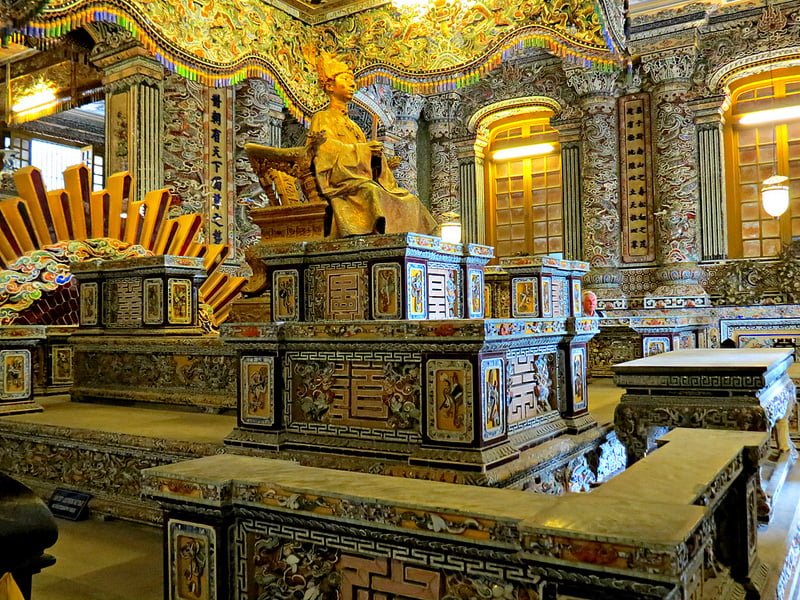
Upon entering the Tomb of Khai Dinh, visitors are greeted with a grand staircase adorned with intricate dragon motifs, including 127 stairs. Passing the first 37 stairs is Tam Quan Gate; continue passing the next 29 stairs to Nghi Mon and Bai Dinh Yard; above are two courtyards; each floor is 13 steps apart; and Thien Dinh Palace is located in the highest position. The main hall, known as the Thien Dinh Palace, houses the tomb of Emperor Khai Dinh. The interior of the palace is adorned with elaborate mosaics crafted from broken pieces of colorful glass and porcelain, depicting intricate scenes from Vietnamese history and mythology.
Discover the Enchanting Beauty of Khai Dinh Tomb: 3 Must-See Highlights
1, Tam Quan Gate
Tam Quan Gate is known by its name, which translates to three gates: one main gate and two auxiliary gates. As you approach, you are struck by the imposing presence of the gate of stone pillars covered with enormous dragon statues with intricately carved details.
The gate serves as a portal to a sacred world where the tomb of Emperor Khai Dinh awaits. At the same time, it also serves as a gateway to history, transporting visitors back in time to experience the majesty and opulence of Vietnam’s imperial heritage.
2, Nghi Mon and Bai Dinh Yard
To reach Nghi Mon and Bai Dinh courtyard of Khai Dinh Tomb, you will have to walk an additional 29 steps from Tam Quan gate. Upon entering, we will be greeted by a sight of statues depicting courtiers and soldiers arranged in four symmetrical rows, recreating a scene reminiscent of the courtly adoration during King Khai Dinh’s reign. Notably, each statue is intricately adorned with motifs that beautifully showcase the culture and customs of ancient Vietnamese mandarins and people from 1916 to 1925.
3, Thien Dinh Palace
The main architectural feature of Khai Dinh’s tomb is Thien Dinh Palace, which is located at the highest point. As soon as you enter Thien Dinh Palace, you are captivated by its grandeur. Intricate details, ornate carvings, and vibrant colors adorn the palace. The attention to detail is evident in every detail, from the intricately carved dragons on the columns to the delicate patterns on the ceilings.
The interior of Thien Dinh Palace is equally impressive; it is divided into five sections: sided rooms for bodyguards, the front palace called Khai Thanh, which is dedicated to the altar and portrait of Emperor Khai Dinh, and the central space, which houses the emperor’s statue and grave. Behind the altar is the late Emperor’s altar.
Planning Your Visit to Khai Dinh Tomb: Essential Information
1, Vehicle – how to get to khai dinh tomb:
- You can reach Khai Dinh Tomb by riding your motorcycle or car straight down Highway 49.
- To get to Dong Ba – Cho Tuan, take the south bus route and get off at the Khai Dinh bus stop.
2.Khai dinh tomb Map
3, Best visiting time: from January to February
View Khai Dinh Tomb 360
Please consider booking our popular Hue City Tour 1 day
Hue city Tour 1 day - Hue city Tour one day - Hue tour 1 day - Hue Tour oneday
Frequently Asked Questions(FAQ)
How to get to khai dinh tomb?
Khai Dinh’s tomb can be reached by tours, Motorbike, bicycle, cyclo drivers from Hue center.
How much Khai Dinh Tomb entrance fee?
Adult’s entrance fee : 150.000 vnd/ticket (Includes Imperial City & Forbidden City)
Children’s entrance fee: 30.000 vnd/ticket (7-12 old)
When is Khai Dinh Tomb open?
Opening Hours: Daily from 7.00AM – 5.30PM; from Mon – Sun
How far is Khai Dinh Tomb from Hue city center?
Khai Dinh tomb is 10 km away from Hue city center. It is located on Châu Chữ mountain near the former capital city of Hue


